


Klaus Sekot
Managing Director of Bosch MC Battery Solutions GmbH
After studying physical engineering in Heilbronn and taking his first career steps, Klaus Sekot joined Robert Bosch GmbH in 2000. He initially developed sensors and worked in quality management for several years, including in Australia. For the past 10 years, his specialty has been data, software, and derived services. Prior to his current role, he initiated M&A projects at Bosch and was responsible for negotiating and establishing the joint venture.
linkedin.comA model for Europe? How China is scaling battery swapping for electric trucks
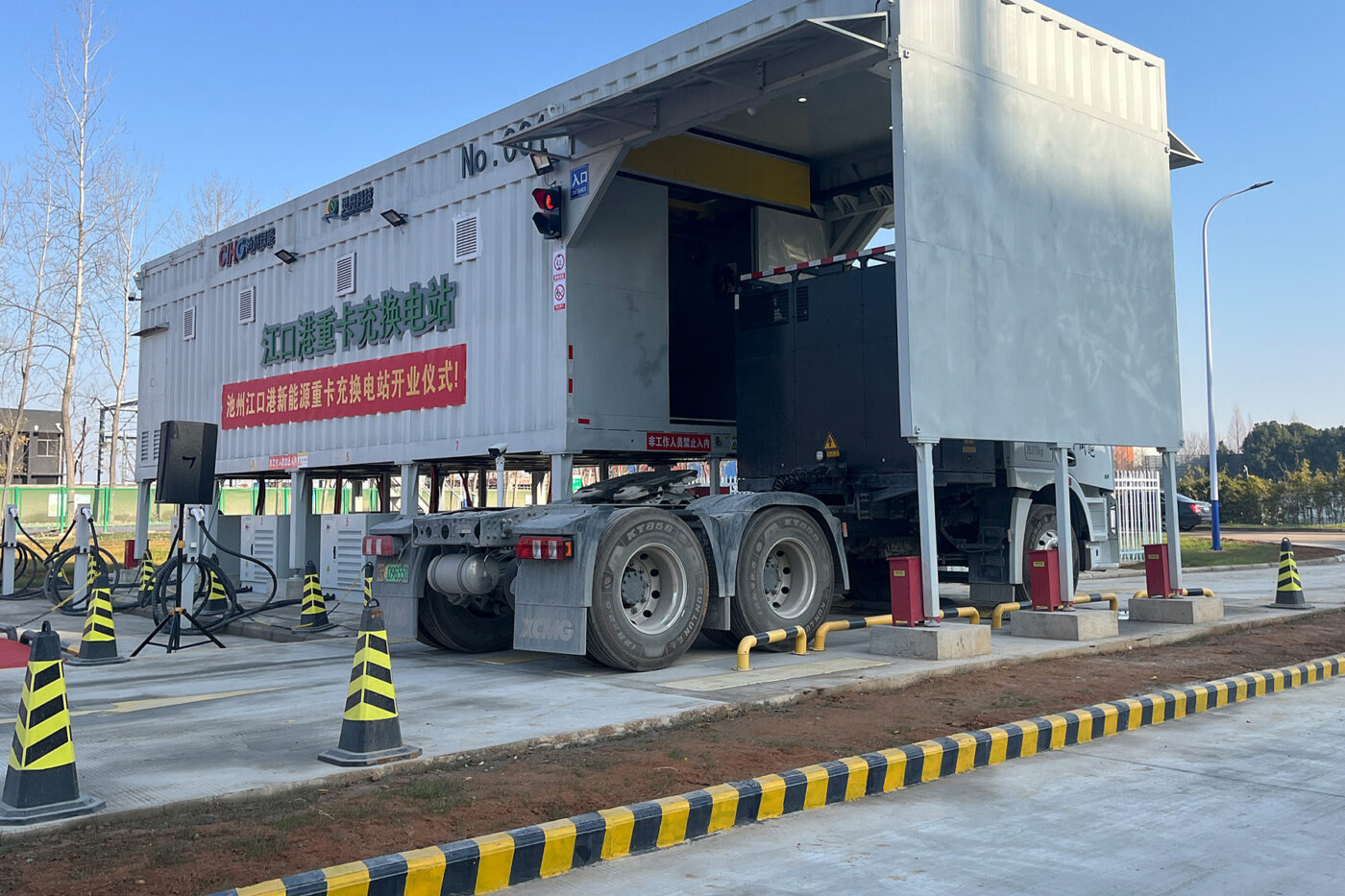
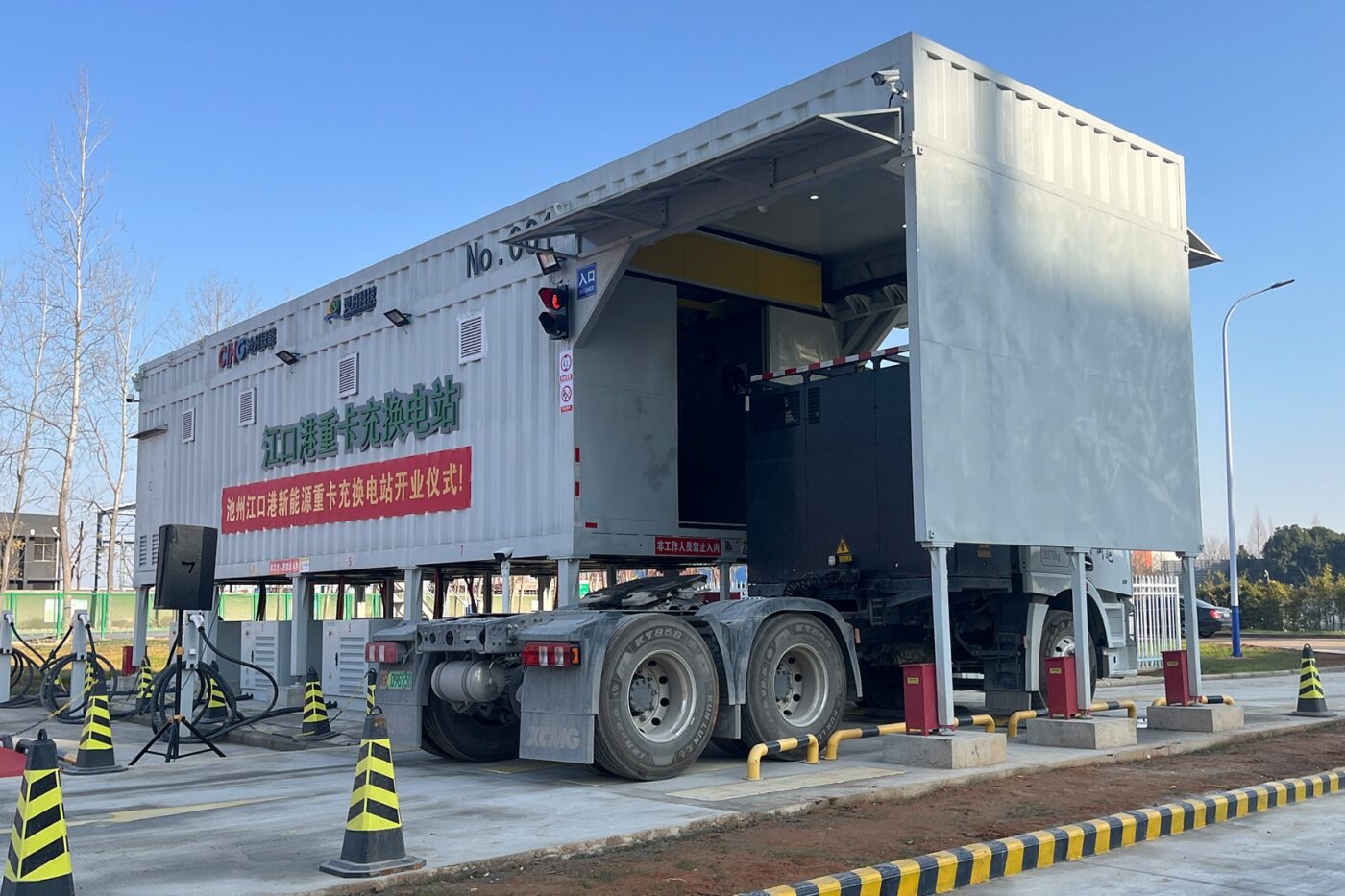
Just a few weeks ago, our editorial team received a press release announcing a new battery-swapping station for electric trucks in China. The sender was Bosch. The facility in Chizhou immediately caught our attention because the operator, Shanghai Lingzhou Technology, did not choose a domestic provider for the swapping station’s technology. Instead, the company selected Bosch MC Battery Service Innovations, a joint venture founded by Bosch and Mitsubishi Corporation in 2025 and based in Ludwigsburg. The new company specialises in Battery-as-a-Service (BaaS) solutions and recently celebrated its first customer project in Chizhou.
Klaus Sekot, one of the two managing directors of the joint venture, has been working on Battery-as-a-Service concepts for years. Having recently returned from China, he explained to electrive editor Cora Werwitzke how a new ecosystem for truck infrastructure is emerging there, with swappable batteries playing a central role. Sekot is convinced that Europe will follow, albeit with a delay. His reasoning: “Five to ten minutes for a battery swap compared to 30 to 45 minutes of charging time with megawatt charging – this is a huge advantage for long-haul heavy-duty trucks.”
Only recently, CATL and Octopus Energy announced plans to develop a battery-swapping network for electric trucks in Europe. It is a clear sign that the technology is beginning to gain traction beyond China. That makes it all the more worthwhile to take a closer look at how battery swapping works and why it is attracting growing interest – voilà:
Mr Sekot, let’s start at the very beginning: what is a ‘Battery-as-a-Service’ solution in simple terms?
Battery-as-a-Service means that the battery remains the property of a third party, such as a leasing company, investor or operator, and is provided to drivers or fleet operators as a service. The key challenge is the battery’s residual value. Financial institutions are generally unwilling to finance an asset if they cannot accurately assess its condition.
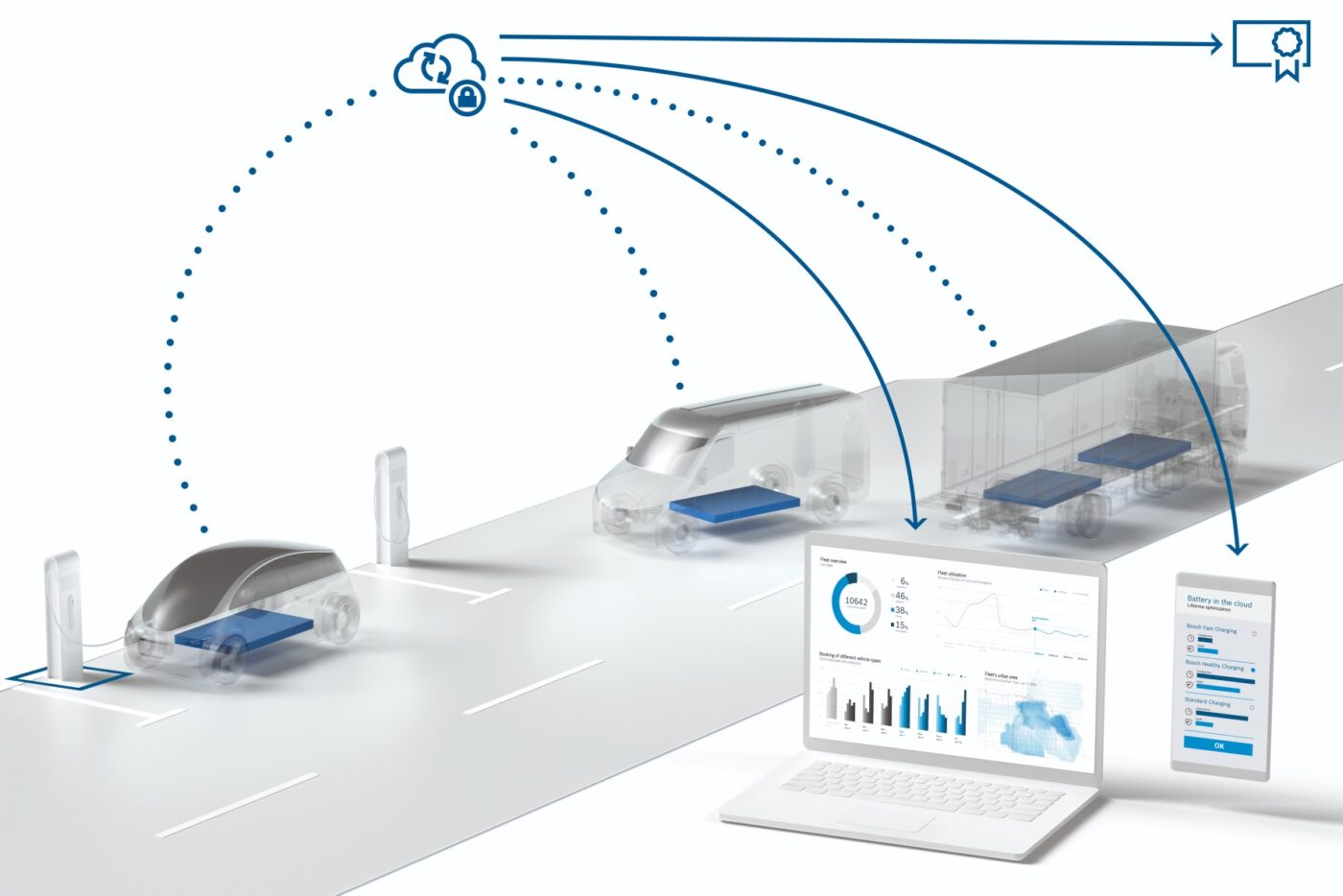
This is where our ‘Battery in the Cloud’ technology comes in. It forms the basis of our services by enabling us to determine the precise state of health of each battery, predict its ageing process and provide the data that banks, insurers and leasing companies require to finance battery-electric vehicle fleets.
In short, BaaS makes electric mobility affordable for fleet operators. Our software services, in turn, provide the transparency needed to make BaaS viable in the first place.
So, you are an enabler for BaaS providers and do not lease batteries yourselves?
Exactly. We neither own the batteries nor lease them. We develop business models with our customers that enable them to offer Battery-as-a-Service in the market. These could be swapping stations, leasing companies, or other customers.
The first battery-swapping station for electric trucks in China is now operating with your technology. What role does your solution play?
In the Chizhou project, we essentially provide four core services. First, intelligent charging management: AI-supported algorithms determine when and how quickly each battery is charged. This helps extend battery life and reduce costs. Second, we provide asset monitoring through digital batteries. Each battery has a digital twin in our cloud, enabling us to detect anomalies, report them and initiate countermeasures when necessary.
Third, we provide the data foundation for connected insurance products and maintenance planning. In short, we turn a mechanical battery-swapping process into an intelligent, predictable and financeable service.
And the fourth core service?
In China, we have actually created a digital marketplace on top of that, which we provide to our customer. This platform handles battery bookings, demand planning, and payment processing. We are also open to third-party services, such as insurance packages or Tyre-as-a-Service, a leasing model for tyres. Everything runs through an app from our joint venture.
An app for end customers? So, the users of the swapping station, for example?
Yes, it also extends to the end customer. While we develop these solutions for our B2B customers, they ultimately support an end-customer-facing service. Drivers can use the app to check whether sufficient batteries are available at a station and whether they can carry out a battery swap there. The app also handles the payment process.
It sounds like your joint venture is a veritable software powerhouse.
Software is one part of our expertise. Bosch contributes significantly here, particularly the know-how on how to develop, operate, and reliably deploy software. At the same time, it is also crucial to understand batteries—and to have automotive expertise.
How promising are battery-swapping stations for your Bosch joint venture?
Very promising. But to be clear, we do not build battery-swapping stations ourselves. We act as an enabler. Our market consists of companies that operate, finance or insure swapping stations, and that market is growing rapidly.
In 2024, nearly 30,000 swappable heavy-duty electric trucks were registered in China. During a recent visit, I spoke with a heavy-duty truck dealer who told me that 80 per cent of the vehicles she sells are electric. More than half of those are battery-swappable electric vehicles.
Does this mean battery swapping is standardised across multiple brands in China?
In China, there are actually three standards running in parallel. The swapping standard we use in Chizhou is supported by four truck brands.
Does this explain why this charging approach is currently developing in China—and not here?
China has deliberately promoted the battery-swapping market since the early 2020s as part of its industrial policy. The government designated pilot cities, provided targeted support for swapping stations and encouraged the development of the necessary infrastructure. At the same time, Chinese manufacturers worked together to establish common standards. In that sense, battery swapping has benefited from a coordinated approach to infrastructure development.
In Europe, by contrast, the focus of the Alternative Fuels Infrastructure Regulation (AFIR) is primarily on cable-based charging, including DC charging and the Megawatt Charging System (MCS). Battery swapping receives comparatively little attention. In our view, Europe’s challenge is not a lack of technological capability but rather a deficit in regulation and coordination.
Are Europeans aware of this?
A new white paper* from the Fraunhofer Institute for Material Flow and Logistics, developed in collaboration with leading industry players, underlines this point. Europe is not lacking pilot projects in the field of battery swapping—some have been running since 2020. However, the white paper explicitly warns that if Europe does not establish its own standards soon, Chinese standards could effectively become the default.
At Bosch MC Battery Service Innovations, we see ourselves as bridge builders. We are active in both regions and recognise that battery swapping is likely to reach Europe as well, albeit with a considerable delay. That is precisely why the Chinese market is so important to us: it provides valuable insights and practical experience from which we can learn.
What potential do you see in swapping technology?
In my view, battery swapping will not replace stationary charging. Instead, it will become an essential solution for specific use cases and complement conventional charging infrastructure. In certain segments, the technology offers clear advantages. A battery swap takes just five to ten minutes, compared with 30 to 45 minutes for megawatt charging. For long-haul transport, that difference is significant.
Over the medium to long term, I see three stages of development. The first is market penetration in China. The second is international expansion into markets that are receptive from a regulatory perspective, such as Japan and Europe. The third is the integration of battery swapping into smart energy systems. Swapping stations could also function as decentralised buffer storage for renewable energy, helping to balance the grid and optimise energy use.
That would be a genuine gamechanger for the energy transition in freight transport.
What might this look like in practice for a logistics company?
For logistics companies, the available grid connection often becomes the limiting factor. Imagine a large haulage operator where 40 trucks need to be unloaded and loaded at the same time and then return to the road within 30 to 40 minutes. Charging all of them simultaneously with megawatt charging would require the power capacity of a small town. In many cases, that is simply not practical.
Battery-swapping stations offer an alternative for handling such peak loads. And there is another important point: vehicles designed for battery swapping can also be charged via cable. This is already standard practice in China, and we expect the same approach to be adopted in Europe.
Speaking of the power grid: could battery-swapping stations also feed energy back into the grid in the future?
Yes, we are considering bidirectional charging. Swapping stations are ideally suited for this. For example, if they are used less over the weekend, the stored energy can be used as a flexibility reserve. You can charge during off-peak times and feed energy back into the grid during peak demand.
Practically speaking, this is the much-discussed virtual power plant, where the batteries are also physically co-located?
Exactly. This allows you to earn additional revenue, and on Sunday night, you recharge all the batteries so that everything is ready to go by the start of the week.
What role does battery health play in your business model?
Battery health is fundamentally important in the electric age because the battery typically accounts for around 40 per cent of a vehicle’s investment cost, sometimes more, sometimes less. This is one reason why the topic is receiving so much attention. The decline in leasing rates for electric vehicles, particularly passenger cars and light commercial vehicles, illustrates this development.
Three or four years ago, many leasing companies assumed they would need to fully depreciate electric vehicles during the first leasing cycle, which is typically around three years. Since then, it has become clear that batteries can comfortably last the lifetime of a vehicle. As a result, leasing rates have fallen.
Even so, battery health remains a complex issue. How is the battery charged? What impact does megawatt charging have on battery ageing? And what about ultra-fast charging? These questions are especially relevant in the commercial vehicle sector.
With our Battery-as-a-Service offering, we aim to help customers strike the optimal balance between electricity costs, battery state of charge, vehicle availability and battery-friendly charging and discharging. The key requirement is a comprehensive understanding of both the battery itself and the operational needs of the customer.
Your first customer is a Chinese company. Which markets are you focusing on with your BaaS approach? Are you primarily looking at China, or elsewhere too?
China is our laboratory and, of course, our market. Europe remains our home market. We deliberately established Bosch MC Battery Service Innovations not as a China-focused joint venture but as a global platform. The EU’s CO₂ fleet limits for commercial vehicles—minus 45 per cent by 2030—will drive the electrification of Europe’s heavy-duty transport sector. If we can introduce mature BaaS models with proven technology and partnerships, Europe will naturally be a promising market for us.
And beyond China and Europe?
When we founded our joint venture, we stated in our antitrust review that our target markets are China, the EU, Japan, the USA, and India. China is currently the fastest-growing market. Europe is strategically just as important. The next few years will be decisive here. Our partner, Mitsubishi Corporation, brings its network to Japan. We also see enormous potential in India and the USA, albeit more long-term. In short, we are starting in China but thinking globally from the outset.
When did you personally realise that BaaS could be a real gamechanger?
For me personally, the turning point came in 2023, when I began working on the joint venture project and looked closely at the registration figures from China. For the first time, more new electric trucks than diesel trucks were registered in a single quarter. At the same time, around 35 per cent of these new energy vehicles were equipped for battery swapping.
At that point, it was clear that this was no longer just a trend but a fundamental shift in the market. I realised that fleet operators and financiers urgently needed a solution of the kind that we had been developing together with Mitsubishi since 2019. It felt as though the market had caught up with the work we had already been doing.
What became evident then was that this was about far more than software. It was about creating the infrastructure needed to enable an entirely new market.
So, local logistics companies can already start familiarising themselves with BaaS?
Let’s put it this way: the core issue is managing energy flows—energy that goes into the battery and energy that the battery provides. Within this overall system, you need to ensure that you either reduce costs or increase revenue. I believe this will be the major topic of the coming years—across all sectors, from private households to the commercial sector. It affects everyone, whether a company from a different industry or a logistics firm—because we all need energy.
Mr Sekot, thank you very much for the conversation.
*Whitepaper available as a PDF at iml.fraunhofer.de
0 Comments