


ICCT rankings reveal EU’s bestselling commercial EV manufacturers
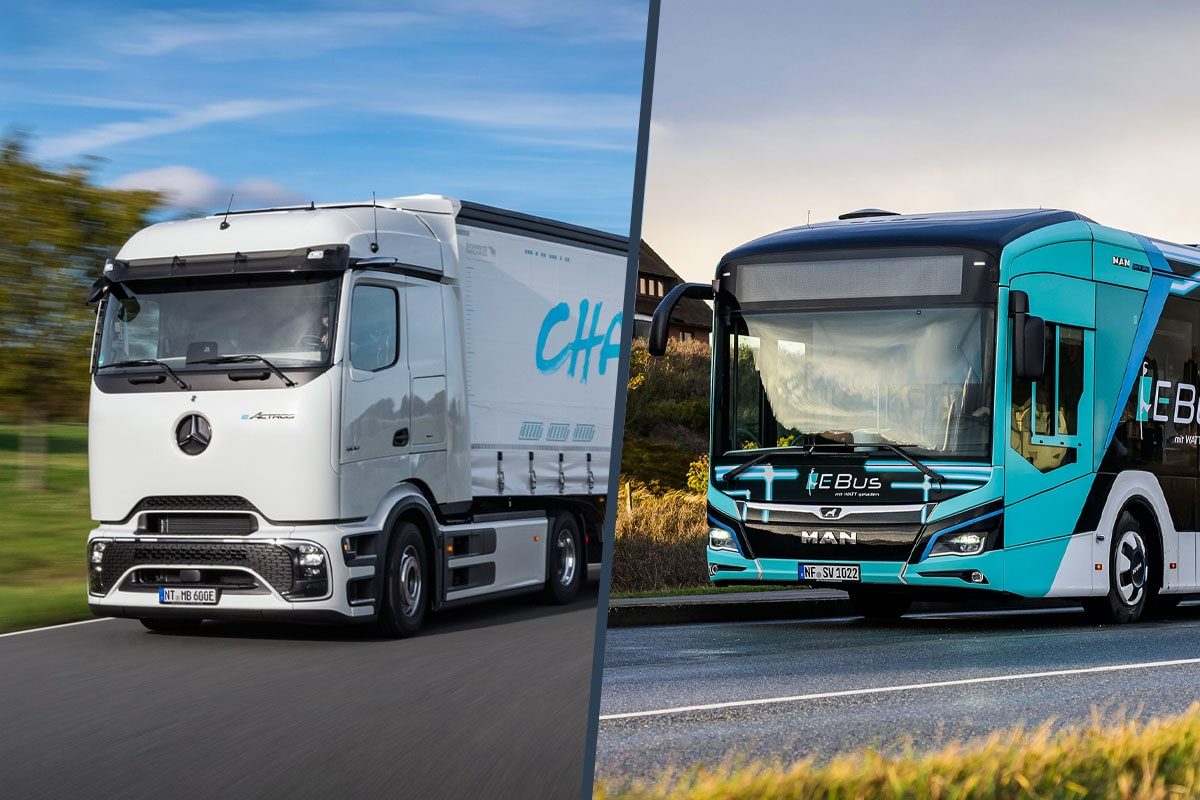
Earlier this year, we examined the latest market developments for electric buses and trucks using Q1 data from the European Automobile Manufacturers’ Association (ACEA). The latest analysis published by the International Council on Clean Transportation (ICCT) provides a deeper dive, and presents a detailed ranking of the most successful manufacturers in the battery-electric bus and truck segments. In the first quarter, German manufacturers Mercedes and MAN led the heavy battery-electric truck segment, while Mercedes and Ford topped the rankings for light and medium battery-electric trucks. Meanwhile, in the electric bus segment, the Chinese manufacturer Yutong took the lead.
Like ACEA, the ICCT bases its findings on EU registration statistics. However, the figures differ due to varying segmentation criteria. The ICCT classifies heavy battery-electric trucks as vehicles over 12 tonnes (ACEA: > 16 tonnes) and light to medium-duty trucks as those between 3.5 and 12 tonnes (ACEA: 3.5 – 16 tonnes). For buses, the segmentation is identical (both > 3.5 tonnes). A key difference is that ACEA does not distinguish between battery-electric vehicles and plug-in hybrids, instead grouping all externally chargeable vehicles together. The ICCT, however, focuses solely on ‘zero-emission vehicles’ (which includes both BEVs and fuel cell electric vehicles).
These definitional differences are worth bearing in mind, as according to its criteria, the ICCT recorded 6,355 zero-emission commercial vehicles sold in the EU (specifically: EU-27 excluding Malta and Finland) in the first quarter of 2026. This includes roughly 1,600 heavy trucks, 2,000 light and medium-duty trucks, and 2,700 buses. Notably, the number of heavy trucks nearly doubled compared to Q1 2025.
Furthermore, registrations of electric heavy trucks accounted for a 2.3 per cent market share across all drive types in Q1 2026, up from Q1 2025. In the light and medium-duty truck segment, zero-emission vehicles achieved a market share of 19.7 per cent (primarily driven by vans within this category). Electric bus sales also saw significant growth, with the electric share of the overall market stabilising at around 24.1 per cent.
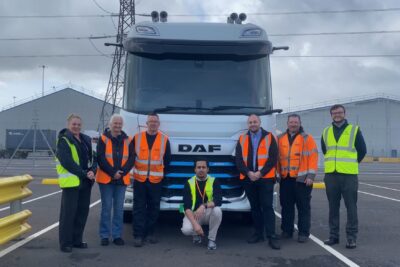
The ICCT’s manufacturer rankings, based on its registration data, reveal the following trends: In the heavy battery-electric truck segment (12 tonnes and above), Mercedes-Benz Trucks maintained its leading position in the first quarter with a market share of just over 30 per cent. Notably, DAF and MAN made significant gains in Q1. “DAF started series production of its electric XD and XF series in September 2025 and sold nearly 200 [zero emission] heavy trucks in Q1 2026 (a 2.4 per cent ZE sales share), up from just 12 sales in Q1 2025 (0.2 per cent)”, according to the ICCT report.
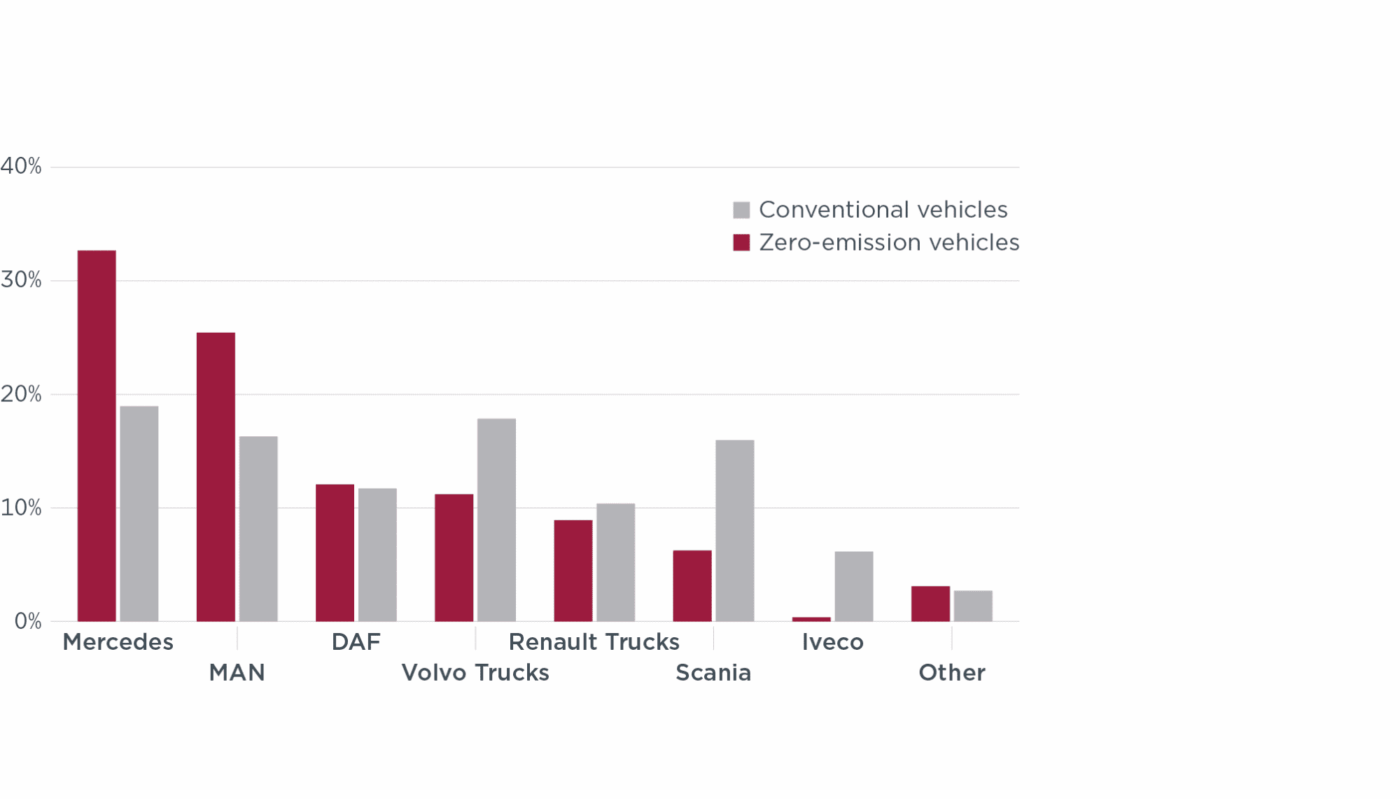
MAN also performed strongly, doubling its market share in the heavy battery-electric truck segment to 411 units sold in the first quarter (a share of 3.6 per cent), up from 130 units (1.4 per cent) in Q1 2025. Only Mercedes recorded a higher sales volume for heavy battery-electric trucks, selling 530 units (a share of 3.9 per cent) in Q1 2026, compared to 95 units (0.9 per cent) in Q1 2025. At the other end of the spectrum, Iveco sold just six heavy battery-electric trucks in Q1 2026. Meanwhile, the former market leader Volvo Trucks now ranks fourth with a market share of just over 10 per cent. However, the Swedish manufacturer recently unveiled its new flagship electric truck, which could boost sales in the coming months.
The study’s authors highlight that several countries are now leading the way in the 12-tonne-plus battery-electric truck segment. Germany remains the largest market, registering 536 new electric trucks in Q1, with a market share of 3.5 per cent. However, the Netherlands (338 vehicles, 10.3 per cent market share), Sweden (125 vehicles, 9.7 per cent), Denmark (100 vehicles, 10.0 per cent), and Austria (138 vehicles, 8.0 per cent) are experiencing even more dynamic growth.
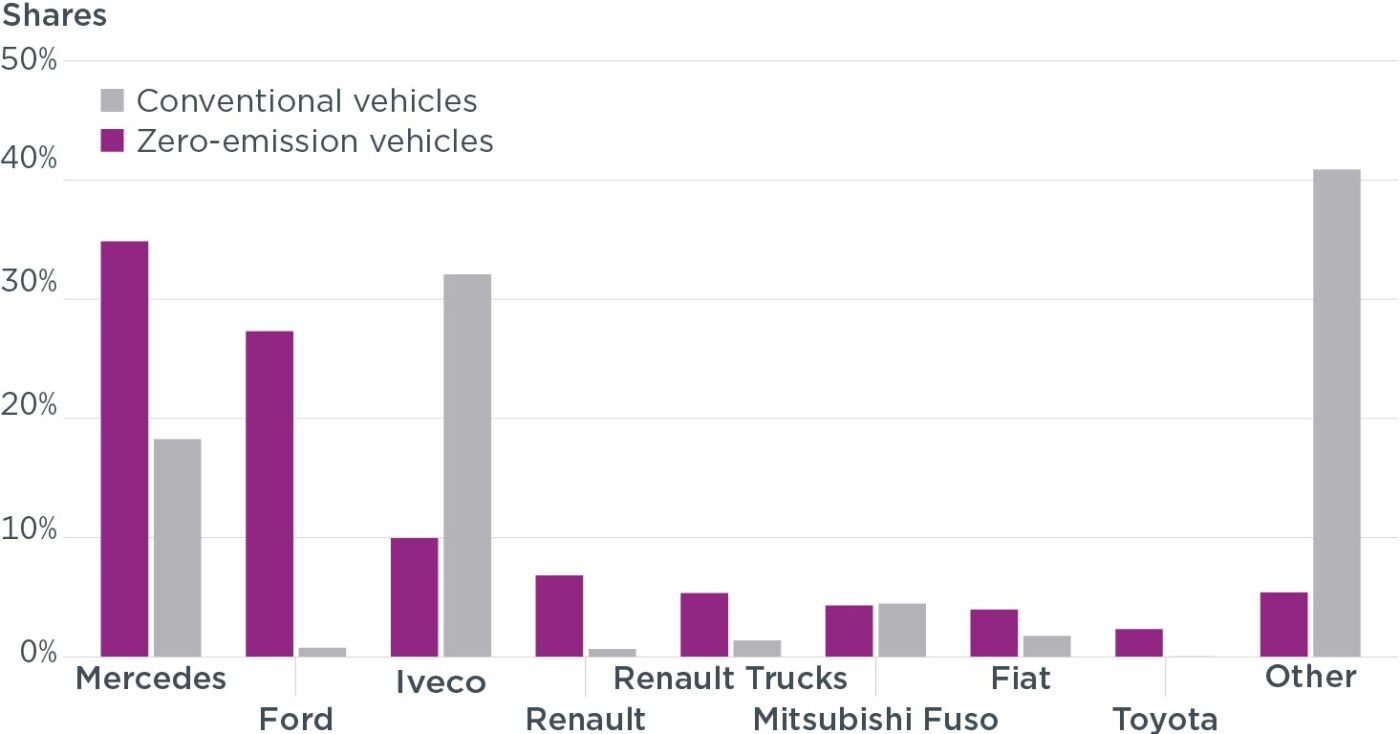
In the 3.5 to 12-tonne battery-electric truck segment, three manufacturers dominate: “Continuing a trend from previous years, Mercedes, Iveco, and Ford comprised roughly 70% of the total ZE medium truck and van market,” according to the ICCT. The Nordic countries are among the largest buyers in this segment. Denmark, Sweden, and the Netherlands each recorded an electric vehicle share of just under or over 60 per cent of all registrations.
In the electric bus market, a notable trend is the slowdown in zero-emission city bus sales at the end of 2025: “After averaging close to 60 per cent across Q1–Q3 2025, the sales share for ZE city buses fell to 54 per cent in Q4 2025 before rebounding slightly to 55 per cent in Q1 2026,” the authors note. Portugal, in particular, has seen a surge in electric bus adoption (50 per cent electric share, up from 3 per cent in Q1 2025), as have Italy (34 per cent, up from 13 per cent in Q1 2025) and Lithuania (59 per cent, up from 40 per cent). Growth has been less dynamic in Germany (16 per cent, down from 29 per cent), Belgium (28 per cent, down from 44 per cent), and especially Greece (2 per cent, down from 50 per cent).
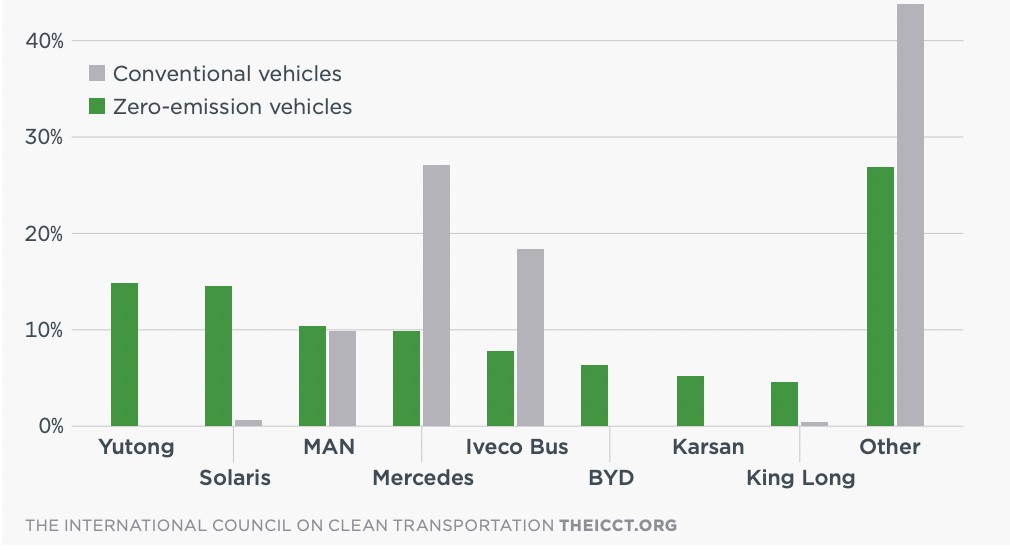
Another key takeaway: Chinese manufacturers made significant gains in Q1 2026 “relative to more established European manufacturers,” the report states. “Yutong led in terms of ZE sales share, the first time a Chinese brand has done so, with BYD and King Long also placing in the top eight.” The market is becoming increasingly competitive, with Yutong narrowly leading Solaris with a 15 per cent market share. MAN and Daimler Buses follow with market shares of around 10 per cent.
0 Comments